.png)
5 business pearls of wisdom my coaching clients use to go from good to GREAT

As an MBA mentor who’s experienced firsthand the value of excellent coaching, my style in supporting founders along this rollercoaster called Entrepreneurship combines the directive advice from my mentorship training (i.e. explicitly instructing to DO THIS and DON’T DO THAT!) with the thought-provoking style of questions that helps clients arrive to their own conclusions.
But my best clients sometimes turn the tables, and point the questions in my direction, instead. Recently, one asked:
What are the most valuable lessons or advice you’ve picked up through working with other founders?
Now, the more specific the advice the better* - but it did get me thinking…
If I could handpick only a small selection of the best business advice to give to founders, they’d be the following:
Building a business isn’t actually hard; it’s managing what’s between the ears that’s the real challenge
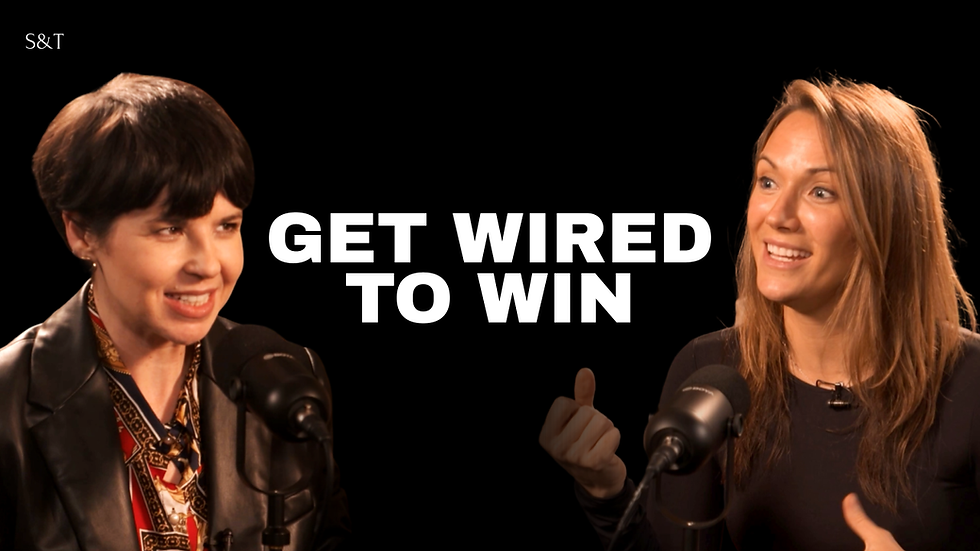
In my exclusive Strategy & Tragedy interview with the exited founder of Fanbytes and now published Sunday Times bestselling author, Timothy Armoo, we discussed the mantra that gets him through the toughest of business challenges:
“It’s not that deep”
Have a watch below for some true inspiration from this success story against all odds, and help in regaining perspective when it's all getting too much:
Dealing with uncertainty
Like Armoo's mantra above, sometimes it's just a short and simple quote that can be the most powerful.
In true James Clear style, here's a line from one of his excellent newsletters that's stuck with me and resonated with my clients amidst so much turbulence:
“The ultimate form of preparation is not planning for a specific scenario, but a mindset that can handle uncertainty.” - James Clear, bestselling author of Atomic Habits
This was shared largely in response to high-performing leaders' natural anxiety to want a plan for various hypothetical scenarios. One thing is scenario planning and risk management, another is the mental toll and unnecessary stress this creates when your energy as a leader is the most valuable resource you have.
A CEO only has three jobs
And they are: 1. Set the vision
Build the team
Ensure there’s enough money
It's very easy to get bogged down by anything and everything in business, especially in the early days. This comes from a conditioned addiction to "busyness" for many of us, and a false sense of productivity that might make us feel good in the moment, but doesn't always move the needle. It can also come from a deeper, people-pleasing conditioning, and simply an anxiety that leads us to crave that constant sense of momentum, because stopping & strategising feels like a luxury we can't afford (even though that's exactly what you should be doing). It's precisely this lack of strategy that leads us to fill our calendars with a hodge-podge of meetings, 1:1s, poorly-qualified sales calls, and admin.
(Ever heard the phrase: "If you stand for nothing you'll fall for everything"? It's like that in business, too. without a clear strategy, we end up saying yes to everything and burning out in the process).
That's why keeping things clear, focused, streamlined, and simple is the way forward. ("Complexity is the enemy to execution," as I often find myself saying). Less is more.
So, your job as a CEO is just to do the aforementioned three things - across culture, talent, finances. Everything outside these areas should be delegated to a competent leadership team.
Focus.
Customer-first, always
At Oneday, where I mentor MBA students in Entrepreneurship who are starting & scaling their business alongside their studies, the fantastic program focuses heavily on market validation.
The reason for this is twofold: not only is it the most important fundamental when starting a new business, but it's also - shockingly - the most overlooked.
From reaching decision-makers who match your ICP to learning how to conduct market research and properly interview people using 'The Mom Test,' customer discovery is a real art form that takes guidance and practice.
If you're past the point of just starting out and have traction with paying clients then firstly, bravo! Secondly, the customer discovery never ends. Some of the most successful pivots in business have come from a customer suggestion.
Stay close to your clients. Always talk (listen) to them.
Remember, your client is everyone else's competition.
Men vs women
One of my biggest observations working with 100 clients via my award-winning marketing consultancy, mentoring dozens of MBA students in Entrepreneurship, and working privately with my 1:1 clients over the past decade+ is the difference between men and women.
Through social conditioning (and of course the wider, systemic, patriarchal systems) men typically have a level of unapologetic confidence that enables them to be bolder, to take more risks, and - frankly - to get out of their own way a lot more often. (This doesn’t necessarily mean a “bragadocious” breed of arrogance, but a deep self-assurance I find, sadly, too many women lack).
We all know, for example, men will apply to jobs when they only meet 70% of the criteria, whereas for women that bar needs to be much higher - more like 90%.
This is one example of how very capable, talented, smart women unfortunately (and unknowingly) hold themselves back - especially compared to a straight white man.
I believe this to be more of a macro than a micro issue (which means I'm not pointing fingers at any specific individuals, but more acknowledging the systemic issues in society which do set up men much more easily for success - in many ways).
What to do with this? The last thing I want is to turn up the volume on an already-unhelpful narrative. My aim is that by bringing an awareness of this is a big first step in confidence-building for more women in business, and an understanding that - due to wider, deeper issues - the gender injustices we regularly face are not y/our fault.

From mindset principles to practical customer discovery, from staying focused to getting our of your own way, these are my top five pearls of business wisdom to help set you up for success in your business journey.
- - - - - - - - - - - - - - - - - - - - - - - - - - - - - - - - - - - - - - - -
Interested in working together? Entrepreneurship expert and MBA mentor, Stephanie Melodia, supports founders 1:1 in their business journeys.
Dubbed as a "professional big sis," if you're in the early days with your business (particularly a woman owner of a B2B service-based business like a creative agency or marketing consultancy) then Steph's expertise across growth, product-market fit, pricing strategies and more is for you.
Book your Power Hour directly with Steph here.
- - - - - - - - - - - - - - - - - - - - - - - - - - - - - - - - - - - - - - - -
*Got a specific challenge? Email me and I’ll send you a specific recommendation or tailored advice.